
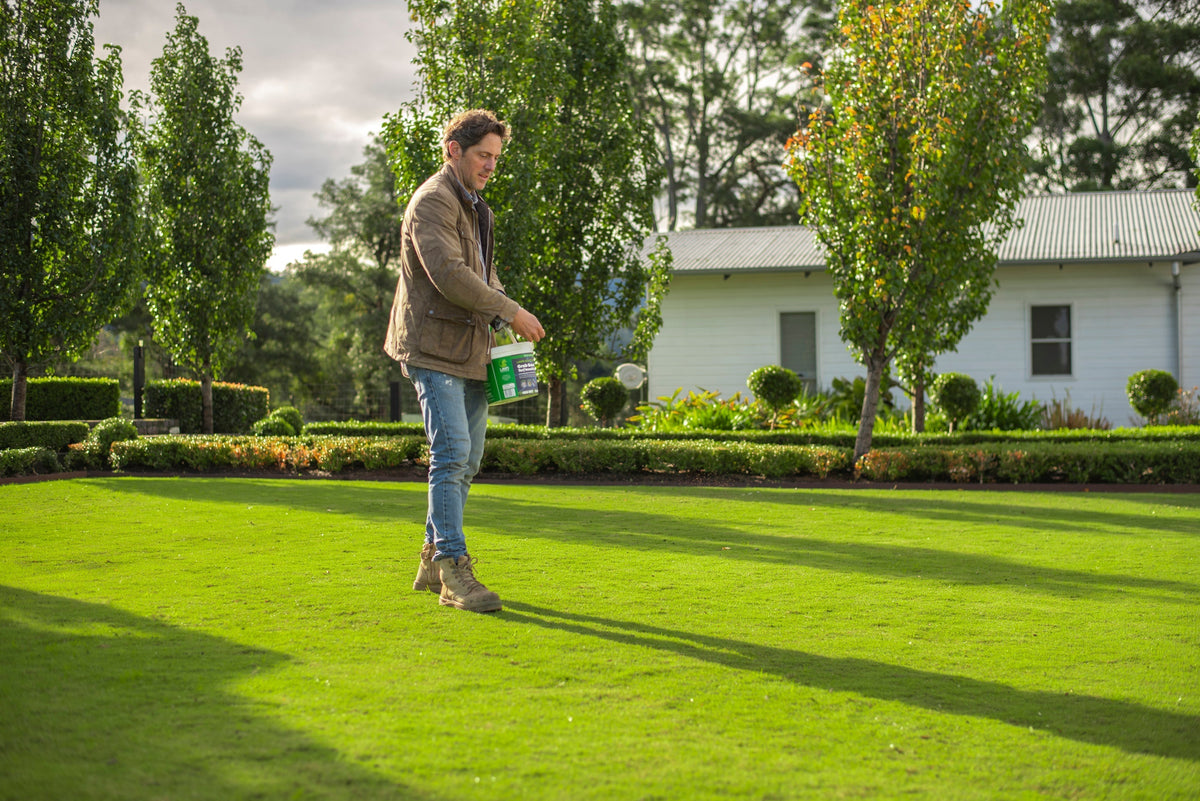
Spring is your lawn's opportunity to recover, strengthen and prepare for summer. As temperatures rise across Sydney, warm season turf starts growing more actively. This means your lawn can recover from winter damage, fill in thin areas and build the strength it needs to cope with summer heat, foot traffic and dry conditions.
If you want a healthy lawn this summer, do not wait until December to start looking after it. Use this spring lawn care checklist to get your lawn ready.
1. Inspect your lawn
Start with a walk around the entire lawn. Look for bare patches, thin growth, weeds, yellowing, brown areas, thatch, compacted soil, uneven areas, poor drainage and signs of pests. It is much easier to deal with problems before summer arrives.
2. Remove spring weeds
Spring is a major weed control period. Remove existing weeds before they mature and spread. Common weeds found in Sydney lawns can include Bindii, Clover and Oxalis, while summer weeds such as Summer Grass and Crowsfoot can become a problem as temperatures rise.
For a small number of weeds, hand removal may be all that is required. Where weeds are widespread, a suitable lawn herbicide may be necessary. We recommend Lawn Solutions Australia All Purpose Weed Control. The convenient clip-on hose attachment ensures effortless application, eliminating the need for tedious measuring and mixing of concentrates. It’s user-friendly and perfect for anyone looking for a hassle-free solution to weed problems.
3. Consider pre emergent weed control
If your lawn has a history of summer weeds, spring can be an important time to consider pre emergent weed control. Pre emergent products work by preventing certain weed seeds from germinating. They are not designed to remove weeds that are already growing.
We recommend Lawn Solutions OxaFert Herbicide and Fertiliser which is specifically designed for warm-season turf varieties. This pre-emergent herbicide targets weed seedlings during germination, preventing annual grasses like Winter Grass and Crabgrass from taking hold.
4. Get your mower ready
Your lawn will grow faster as spring progresses. That means you will probably be mowing more frequently. Before mowing season really gets underway, check your mower. Make sure the blades are sharp and the mower is operating correctly. A sharp blade creates a cleaner cut and reduces damage to the grass.
5. Start mowing regularly
As your turf begins actively growing, establish a regular mowing routine. Avoid cutting too much leaf off at once. If your lawn has become long, gradually return to your preferred mowing height. Different turf varieties have different mowing requirements, so make sure you know the recommended height for your lawn.
6. Check for soil compaction
Walk across the lawn and consider how the soil feels underfoot. If heavily used areas feel hard and compacted, aeration may help. Compaction can restrict the movement of air, water and nutrients through the soil. Aerating the lawn creates openings in the soil and can help improve growing conditions around the roots.
7. Check the thatch layer
Excessive thatch can interfere with the movement of water and nutrients into the soil. If your lawn has a significant thatch layer, spring can be a suitable time to dethatch once the turf is actively growing. Not every lawn requires annual dethatching, so assess the condition of your lawn before deciding whether it is necessary.
8. Fertilise at the right time
Spring fertilising can provide your lawn with nutrients to support strong active growth. The important thing is not to fertilise too early. Wait until your turf is actively growing and temperatures are consistently warm enough for the grass to use the nutrients.
A quality fertiliser can help provide the nutrients your lawn needs as it enters its main growing period and prepares for summer. We recommend Lawn Solutions Premium Fertiliser - it's ideal for all lawn varieties and is packed with essential nutrients and trace elements to encourage strong growth and rich colour.
9. Consider top dressing
Does your lawn have minor uneven areas? Top dressing can help improve levels and the overall appearance of an established lawn. A thin layer of suitable soil or sand can be spread over the lawn and worked into the surface. Top dressing is not necessary for every lawn, but it can be useful where there are minor imperfections or soil composition issues.
10. Check your irrigation
Do not wait for the first major summer heatwave to discover your sprinkler system is broken. Turn on your irrigation system and check every section. Look for blocked sprinkler heads, broken components, leaks and areas with poor coverage. Make adjustments before the weather becomes hot.
11. Check your watering routine
As spring progresses, your lawn's water requirements will increase. However, an established lawn does not necessarily need daily watering. Monitor soil moisture, rainfall and weather conditions. Where appropriate, deeper watering less frequently can encourage stronger root development. New turf has completely different requirements and needs to be kept consistently moist while it establishes.
12. Repair bare patches
If your lawn has small damaged areas, spring is a good time to repair them. Before repairing a bare patch, identify why the grass disappeared. Was it caused by foot traffic, poor drainage, shade, pets, pests or soil compaction? If you do not address the original problem, the patch may simply return.
13. Check for pests
Spring and summer can bring increased insect activity. Keep an eye out for areas of turf that suddenly become thin, brown or damaged despite otherwise good lawn care. If you suspect lawn pests, correctly identify the problem before applying any treatment.
14. Assess your turf variety
Spring is also a good time to ask whether your current lawn is actually suitable for your property. Does it receive the right amount of sunlight? Can it cope with the amount of foot traffic? Does it suit your preferred maintenance level? Are you happy with its appearance?
If the answer is no, replacing the lawn with a more suitable turf variety may be a better long term solution. Use our handy turf comparison chart to find a lawn that's better suited to your needs.
15. Consider a complete lawn renovation
If your lawn has several problems at once, a spring renovation may be worthwhile. A typical lawn renovation can involve weed control, dethatching, aeration, fertilising and top dressing. The work should be completed in the correct order and once temperatures are warm enough for the turf to actively grow. However, not every lawn needs a full renovation. If your lawn is healthy and simply needs regular mowing, watering and fertilising, a simpler spring maintenance program may be all that is required.
16. Consider replacing the lawn
Sometimes the best way to achieve a great lawn is to start again. If your existing lawn is severely damaged, heavily weed infested, uneven or growing a turf variety that is unsuitable for the location, new turf can provide a fresh start. Spring is an excellent time to lay a new lawn because warm season turf is entering active growth and has time to establish before summer.
Your complete spring lawn checklist
- Inspect the lawn.
- Remove weeds.
- Consider pre emergent weed control.
- Check mower blades.
- Establish a mowing routine.
- Check for soil compaction.
- Aerate if required.
- Assess thatch.
- Fertilise once actively growing.
- Top dress if required.
- Repair bare areas.
- Check irrigation.
- Adjust watering.
- Look for pests.
- Assess your turf variety.
- Consider lawn renovation.
- Replace the lawn if necessary.
Choose the right turf for your Sydney lawn
If you are replacing your lawn this spring, choosing the right turf variety is one of the most important decisions you will make. The turf variety you choose can make a significant difference to how your lawn performs. At Greenway Turf Supplies, we supply a range of quality turf varieties including Sir Walter DNA Certified Buffalo, Sir Grange Zoysia, Zoysia Australis, TifTuf Hybrid Bermuda and Eureka Kikuyu. Choosing turf that suits your property's sunlight, soil, foot traffic and maintenance requirements can help you establish a healthier and more resilient lawn.
Each variety has different characteristics, so the best turf for your property will depend on factors such as sunlight, shade, foot traffic, appearance and maintenance requirements.
Is your lawn ready for summer? Get in touch with us to find the right turf for your Sydney property, or explore our blog for more expert lawn care tips and advice.
Spring Lawn Watering Guide: How Often Should You Water Your Lawn in Sydney?